We all dream of a vegetable garden that produces all year round. The reality is that a poorly planned plot of land often ends up abandoned by July, when the heat sets in and watering becomes a chore. Designing a productive, easy-to-maintain vegetable garden starts with accepting a constraint most guides overlook: water isn’t always available when you need it.
Vegetable gardens and water restrictions: plan before you plant
During droughts, local authorities may restrict watering vegetable gardens to certain times of day or even ban it altogether, depending on the alert level. These rules vary from one department to another, and sometimes from one municipality to another. Watering advice that claims to work everywhere would be misleading.
Before choosing vegetables and an irrigation system, check the measures in force at your address. In Creuse, even after river flows rose and restrictions were eased, groundwater reserves remained fragile and had not been significantly replenished. For a vegetable garden, that means planning water-saving practices even when the rain returns.
In practical terms, adapt your garden to this reality by focusing on three things: choosing vegetables that need less water, applying a thick layer of mulch to reduce evaporation and, where possible, collecting rainwater. The Creuse prefecture also explicitly encouraged storage systems disconnected from the river network. Even a modest rain barrel connected to a downspout can make all the difference during weeks when tap-water use is restricted.
To find solutions suited to these constraints, Atmosphère du Jardin’s vegetable garden section offers equipment designed to make the most of your space and manage water efficiently in the garden.
Mulch and healthy soil: reduce garden maintenance without sacrificing yields
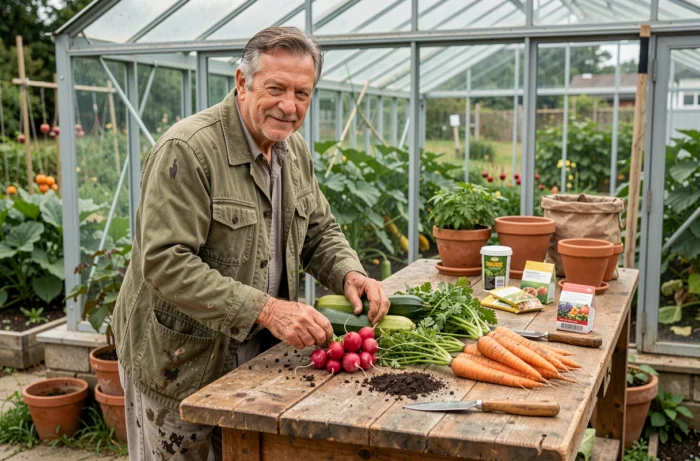
We often hear about healthy soil in permaculture, but the practical principle is simple: covered soil does the work for you. A layer of straw, fallen leaves or shredded plant material retains moisture, suppresses weeds and feeds soil life as it breaks down.
A mulch layer several centimetres thick cuts watering in half. In a small vegetable garden, that means saving hours every week in summer. Spread the mulch after planting, leaving a little space around the stems to prevent crown rot.
Don’t turn the soil every year
Deep digging breaks earthworm tunnels and disrupts the microbial life that makes nutrients available to vegetables. Use a broadfork or digging fork instead: these tools aerate the soil without turning over its layers. The time savings are real: one pass in spring is enough, compared with several hours of traditional digging.
Homemade compost spread over the surface in autumn complements this approach. The organic matter breaks down slowly over winter, enriching the top few centimetres of soil without any extra effort.
A staggered sowing calendar for year-round harvests
A vegetable garden that produces all year round doesn’t rely on one big sowing in April. Stagger your plantings to spread out the harvests and never leave a bed empty.
- February to April: sow lettuce, radishes and spinach under cover. These vegetables tolerate the cold and fill the space before summer crops go in.
- May to July: plant tomatoes, courgettes, beans and peppers. Sow more lettuce every three weeks to avoid all the plants going to seed at once.
- August to October: plant autumn and winter vegetables (cabbage, leeks, lamb’s lettuce and turnips). These crops extend the season well beyond the first frosts.
- November to January: cover empty beds with green manures (mustard, phacelia) to protect the soil from nutrient leaching and fix nitrogen for the next season.
A vegetable garden that produces twelve months a year depends on staggered sowing, not a larger plot. Even in just a few square metres, this rotation over time increases the harvest.
Companion planting in the vegetable garden: save space and reduce treatments
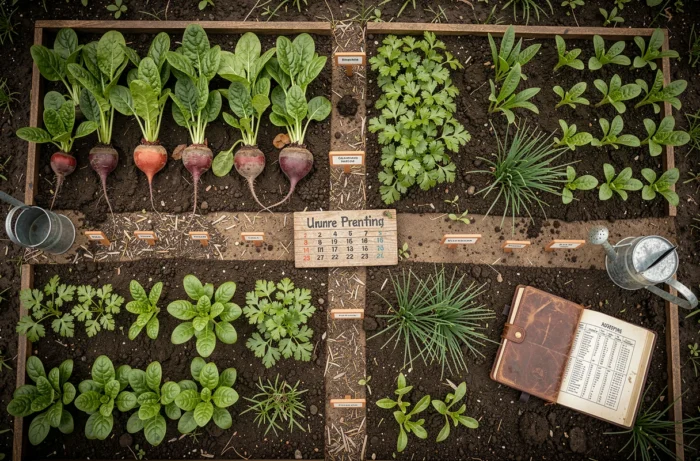
Planting closely doesn’t mean planting at random. Some vegetable combinations work because the plants don’t draw on the same resources at the same time. Carrots and leeks can share a bed without competing: leeks repel carrot flies, while carrots deter leek moths.
Climbing vegetables (pole beans, peas) make use of vertical space, freeing up ground for low-growing crops such as radishes or strawberries. Growing vertically increases production per unit of space.
Combinations to avoid
Nightshades (tomatoes, aubergines and peppers) compete for the same nutrients. Planting them side by side in the same bed depletes the soil and encourages blight to spread. Keep them apart and rotate them between beds each year: ideally, wait several seasons before planting tomatoes in the same spot again.
Crop rotation remains the best free way to limit disease. It costs nothing; all you need is a garden plan written in a notebook or a simple diagram photographed each spring.
Choose vegetables to suit your region and soil
Vegetable garden yields depend as much on variety selection as on the care you give your plants. In heavy clay soil, short Chantenay-type carrots grow better than long varieties that struggle in compacted earth. In sandy, well-drained soil, tomatoes and squash establish easily, but water drains away quickly, making mulch essential.
Choosing varieties suited to your soil helps prevent repeated failures. In windy areas or at high altitudes, opt for hardy vegetables (cabbage, beetroot and potatoes) that can tolerate temperature swings. In Mediterranean climates, fruiting vegetables (tomatoes, peppers and aubergines) thrive in the heat but require careful watering, especially when local restrictions limit watering to specific times.
An easy-to-maintain vegetable garden that produces all year round starts with realistic planning. Three well-managed beds, mulch renewed each season, a rain barrel and a sowing calendar displayed in the garden shed are all it takes to fill a basket every week without spending your evenings tending the garden.