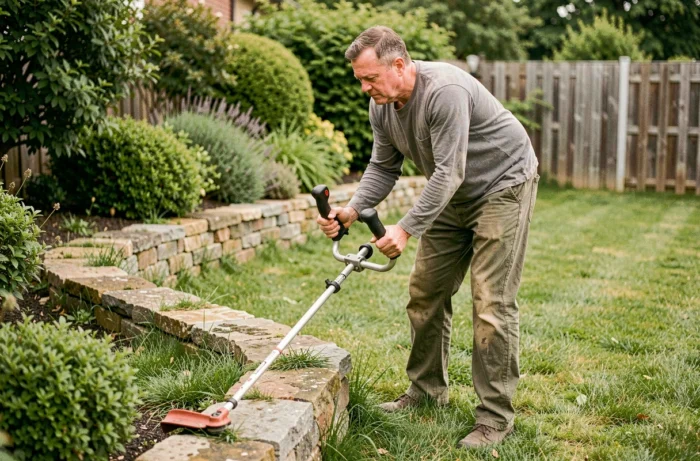
Engine displacement, cutting width, weight: the specifications for petrol grass trimmers list figures that are rarely compared side by side. Whether you have a suburban garden or a sloping plot, the right choice depends less on raw power than on weighing up three or four measurable factors. This article compares those factors and highlights the differences that can tip the decision one way or the other.
Petrol, corded electric or battery grass trimmer: a comparison of technical differences
The three technologies differ in more than just their power source. Their weight, noise levels and cutting widths make them suited to very different uses.
| Criterion | Corded electric | Battery | Petrol |
|---|---|---|---|
| Indicative power | 300 to 1,000 W | Varies by voltage | About 1,000 W |
| Cutting width | Moderate | Moderate | Up to 43 cm |
| Weight | Light | 1.8 to 3.8 kg | Heavier |
| Runtime | Unlimited (mains-powered) | Up to 1 hour (1 to 3 hours to recharge) | Depends on tank capacity |
| Noise | Low | Low to moderate | High |
| Engine maintenance | Almost none | Almost none | Fuel, spark plug, filter |
The petrol model’s cutting width of up to 43 cm gives it a clear advantage on tall grass and embankments. Its extra weight, however, quickly becomes a drawback when trimming along a path or around flower beds.
The comparison charts on coupebordurethermique.fr let you compare these figures model by model, so you don’t have to base your decision on the technology alone.
Guaranteed sound power: an overlooked factor when choosing a petrol model
European Directive 2000/14/EC requires outdoor equipment to display a guaranteed sound power level. This figure, expressed in decibels, appears on the product label. It measures noise emissions under standardised conditions, making it possible to compare different models.
Engine power alone does not predict noise levels. Two petrol grass trimmers with similar engine displacement can differ by several decibels, depending on the exhaust design and line speed.
Local regulations and noise nuisance
In France, there are no uniform nationwide time slots for using powered garden tools. Local or regional regulations set permitted hours, which vary from one municipality to another. Even during permitted hours, the duration, frequency and intensity of the noise can amount to a nuisance.
For a suburban garden surrounded by homes, this factor matters just as much as cutting performance. Checking local restrictions before buying can prevent an unpleasant surprise once the engine is running.
Petrol for every job or as a backup: two equipment strategies
The most useful question is not whether petrol models are better, but when they become the right tool for the job. Two setups are common.
- A large plot with dense vegetation, brambles or an overgrown embankment: a petrol model handles these occasional jobs thanks to its cutting width and power. It can almost replace a brushcutter.
- A medium-sized garden with regular edges along paths and flower beds: a battery or electric model handles weekly trimming without the noise or engine maintenance.
- A mixed plot (well-kept lawn and an overgrown area at the back): use the petrol model for difficult jobs and a quieter tool for trimming to reduce both noise disturbance and wear on the petrol engine.
Assuming that a petrol model always runs longer than a battery model is an oversimplification. The comparison depends on the specific models, not just the technology. A high-end battery grass trimmer can last as long as a petrol model with a small tank when used on the same area.

Running costs of a petrol grass trimmer: maintenance and consumables
The purchase price is only part of the overall cost. A two-stroke petrol engine requires regular maintenance involving fuel, the spark plug and the air filter. Service intervals and part numbers vary by manufacturer: the manufacturer’s manual is the only reliable source for storage and recommissioning instructions.
Line, cutting head and wear
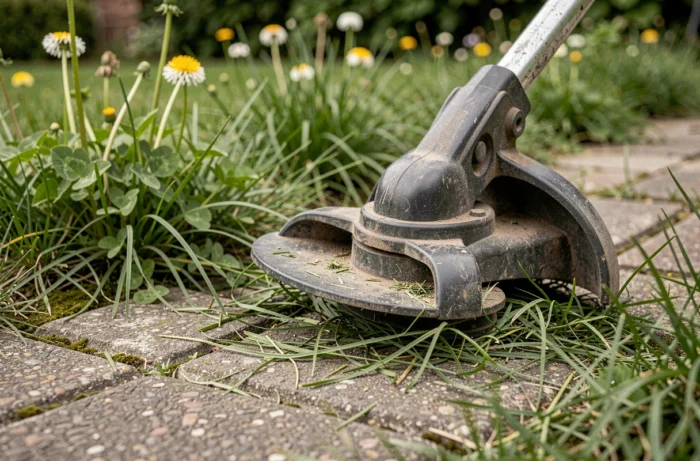
The cutting system also affects ongoing costs. Most petrol grass trimmers use a nylon line spool, with the line diameter determining how well it handles thick grass. Some models replace the line with a plastic blade rotor, which is less prone to clogging but whose blades wear down over time.
- Nylon line: an inexpensive consumable that needs frequent replacement on stony ground.
- Plastic blades: longer-lasting, but compatible with only certain models.
- Quick-load head: saves time when reloading and is available on mid-range and high-end models.
Over a year of regular use, consumables for a petrol model cost more than those for a battery model because of fuel and engine parts. The difference grows if the petrol trimmer is also used for light trimming that an electric tool could handle without maintenance.
Cutting width and vegetation: the deciding factor
A wide cutting width makes it easier to tackle tall grass and scrub, but reduces precision along a low wall or flower bed. Conversely, a narrow head delivers a neat finish, but requires more passes through dense areas.
If the vegetation on your plot regularly grows above ankle height, a petrol grass trimmer with a cutting width of over 35 cm can noticeably reduce working time. On a lawn maintained every week, that width becomes a drawback: the wide cutting head can scalp the edges of planted areas.
A petrol model makes sense when the vegetation calls for more power, not when the size of the area calls for more frequent use. Matching the type of vegetation to how often you plan to use the trimmer gives you a more reliable basis for choosing than plot size alone.